Home
Overview
and
Jacqueline's
Eldercare Mission
Elder Rage
Table of Contents
Elder Rage
Sample Chapter
Elder Care FAQ's
Jacqueline’s Calendar
and
Eldercare Events
Hire Jacqueline
for
Speaking Engagements
Book Jacqueline
on
Your Program

Contact Us

Radio Show: Coping with Caregiving
Upcoming Guests

Be a Guest
Sponsor/Advertise

Listen to Archives

The Further Adventures
of
Mariel & Jake
Elder Care
Links & Resources
Ten Warning Signs
of
Alzheimer's


Website Host


—or—
Take My Father...Please!

How To Survive
Caring For Aging Parents

by Jacqueline Marcell
Eldercare / Alzheimer’s Speaker, Author, Radio Host, Caregiver Advocate
FREQUENTLY ASKED QUESTIONS

How Do I Handle My Elderly Loved One Who:

Is experiencing increasing levels of memory loss?
Wants all my time and attention?
Is a danger on the road but refuses to give up driving?
Refuses to allow any caregiving help in the home?
Can no longer take proper care of their finances?
Needs to see a psychiatrist but, refuses to go?


Is experiencing increasing levels of memory loss?

Call the Alzheimer's Association (800-272-3900) and ask for a referral to a geriatric dementia specialist and ask where the closest dementia diagnostic center is. They will have the most up-to-date elder care, memory loss, dementia and Alzheimer’s disease information. Your loved one’s doctor may not be trained to uncover the earliest signs of dementia, so don’t waste time--it is of great importance to get an early diagnosis, as there are four medications which, in most people, can slow the progression of the disease, which slows the need for full time care.

Inquire about the medications: Aricept, Exelon, Reminyl and Memantine. Once your loved one has progressed further, these medications will still help, but they will not take the person back to when they were relatively independent in the early stage.

Also ask about Vitamin E therapy and make sure the doctor rules out reversible dementias such as a B-12, folate and thyroid deficiency. Understand that depression alone can cause dementia-like symptoms. The right doctor is really the first big key and… More tips on page 282 of Elder Rage.


Is a danger on the road but refuses to give up driving?

This is a serious problem that cannot be overlooked and is usually one of the most difficult hurdles to overcome. Have a doctor whom your loved one trusts check their eyes, hearing and reflexes. If the doctor feels that your loved one should no longer be driving, confidentially ask for a letter stating that. A copy of this letter should be sent to the Department of Motor Vehicles requesting that the license be revoked. This process may take several weeks.

If the situation is critical, contact the DMV immediately and speak with a supervisor, lining up an appointment. Tell your loved one that someone must have reported them driving erratically and that you have to take them to the DMV for a routine exam right away. If the DMV ends up taking the license away--be sympathetic, saying how sorry you are that this has happened. Assure them that you will arrange for alternate transportation so they don’t feel trapped at home. This way, you're not the horrible person who took their last pleasure in life away, and you may have saved some lives. Realize that it is a four times higher accident rate for seniors, and a nine times higher… More on page 286 of Elder Rage.

Back to Top

"I thought I knew Jacqueline until I read her book. Wow, what a story! If you're caring for an elder, you won't believe how much this book
will help you."

—Regis Philbin
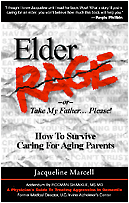
<em>Elder Rage</em> Book Cover
ORDER
Autographed Book
HERE

By Credit Card or Check
Elder Care Expert Jacqueline Marcell
Contact the Author
Jacqueline Marcell